Brighton, UK
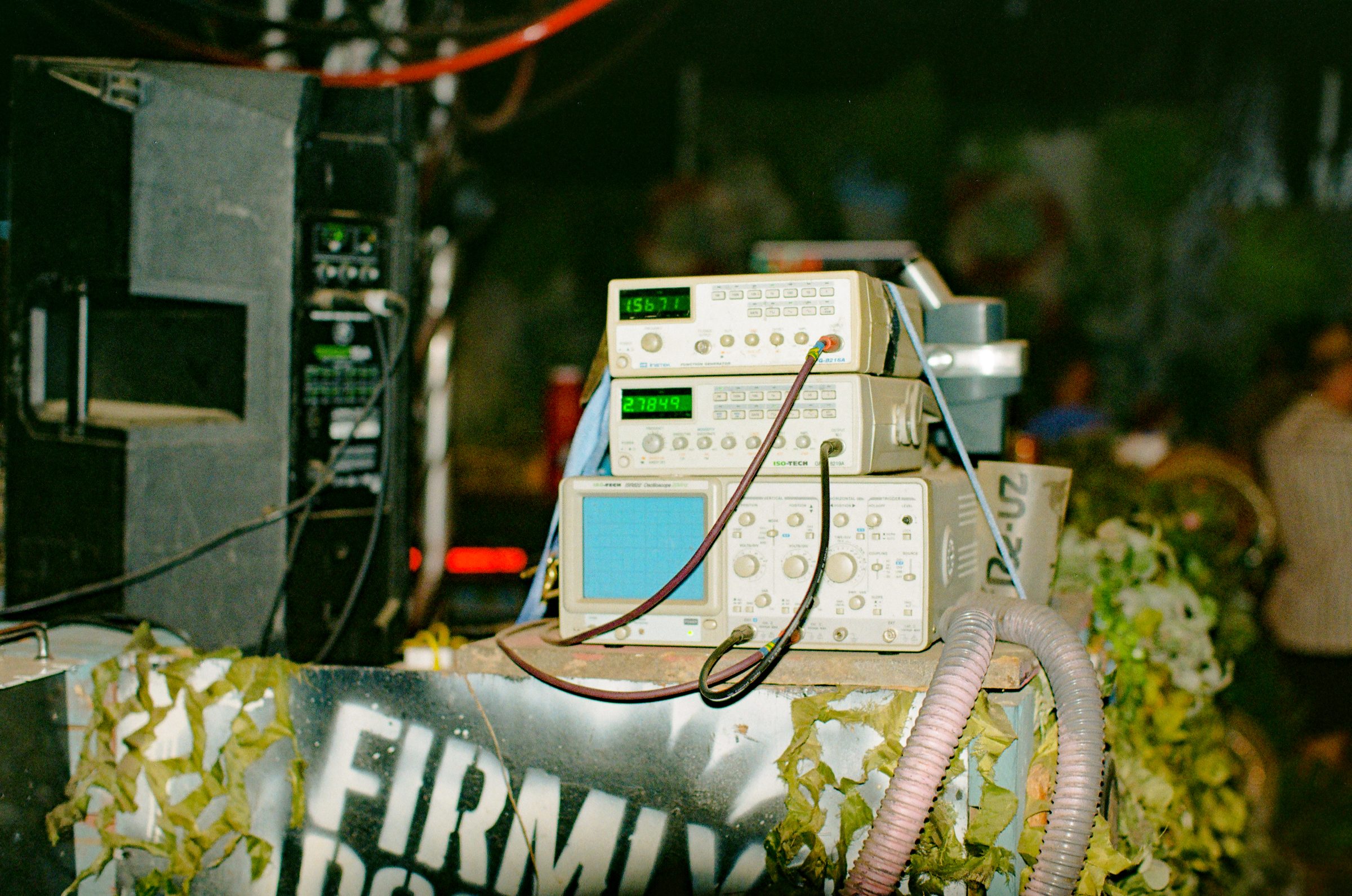
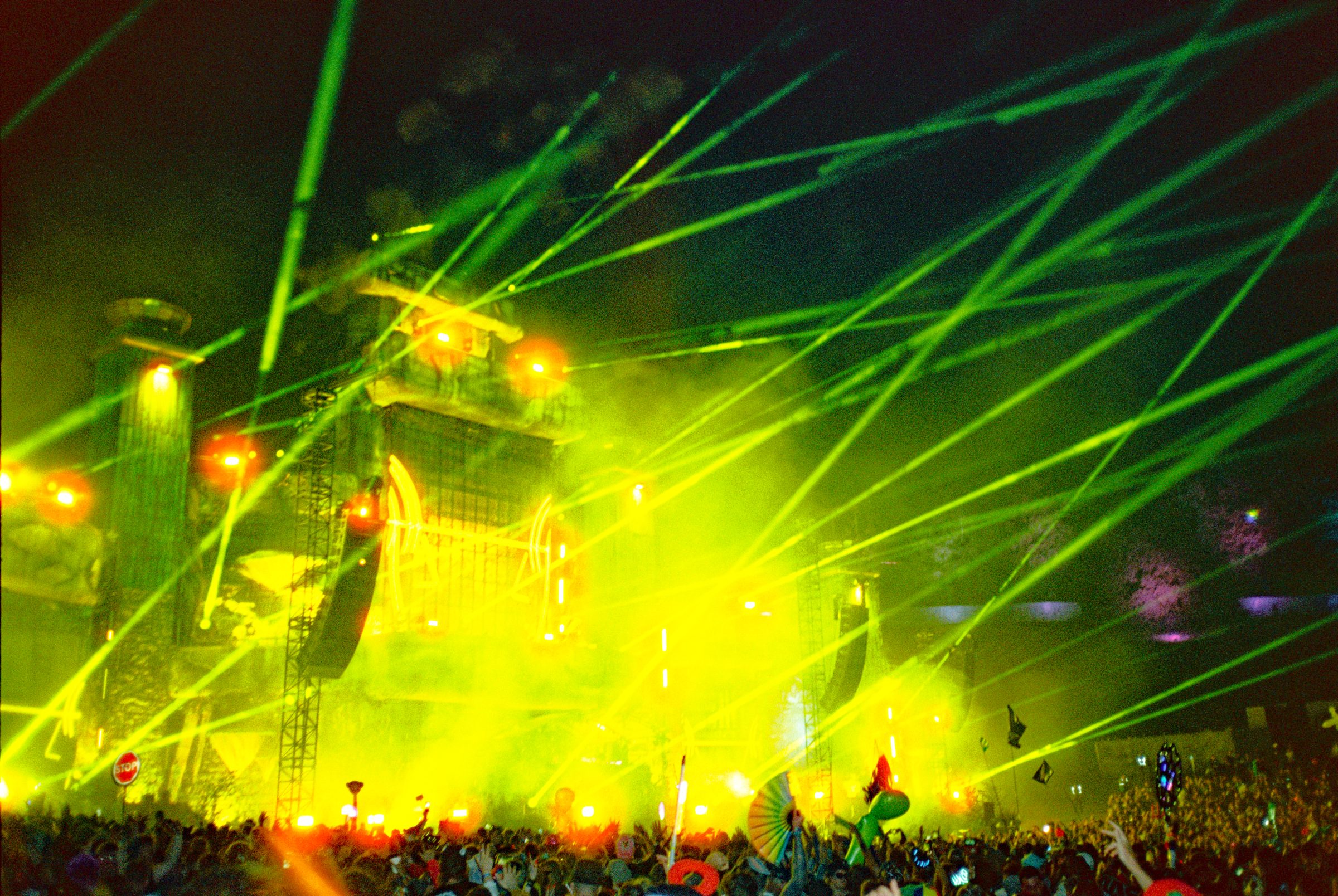
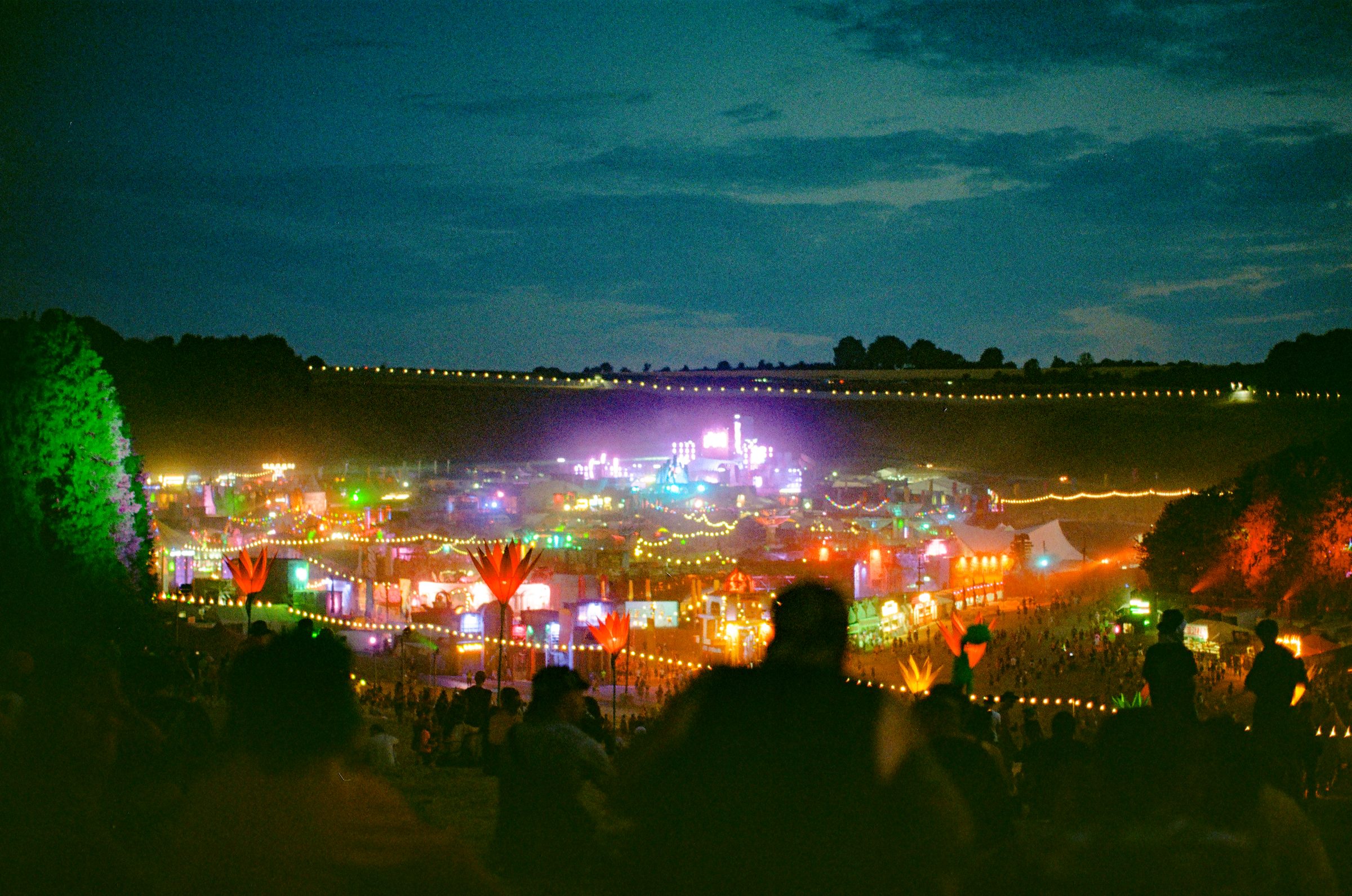
Photographing the UK’s craziest festival over the years
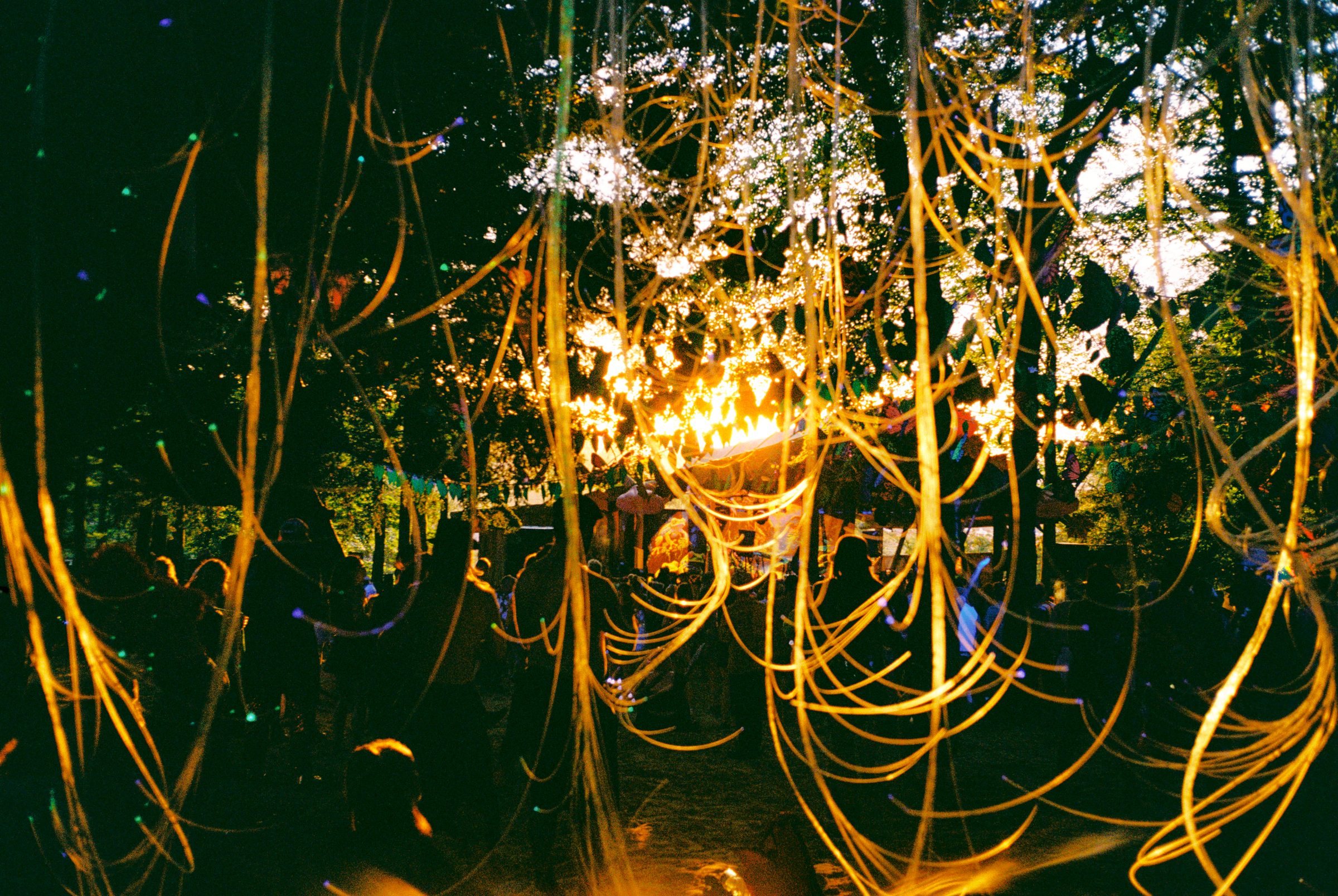
I first went to Boomtown by pure accident. My friend and I were supposed to be going to Boardmasters in Newquay, but the year was 2019 and it was the year of extreme winds. Boardmasters was cancelled, we were stranded not knowing what to do, all this time booked off work and several rolls of film to shoot. I had my beloved Olympus mju II compact camera raring to go; I had not taken it to a festival before and was excited to test it.
Along came Boomtown, which happened to be on the same weekend as Boardmasters, who took the bold risk not to cancel despite the dangerously strong winds. So we snapped up some resale tickets and went on our merry ways, having no idea what we were getting into. We had heard stories of Boomtown and seen the infamous Boomtown Spotted Instagram (R.I.P) of people surfing on blow-up beds down hills turned into rivers of mud, we had seen the crazy theatrics people unwittingly (and wittingly) ended up in. I couldn’t wait to experience it myself. It did not disappoint.
And so started a long love affair with the UK’s craziest festival and the joy of shooting it on film at the same time. One problem though, I lost the Olympus mju ii on the last day of the festival at Tribe of Frog, which devastated me for a while. I hate not knowing what was on there! I really curse myself for that because I had that feeling all film photographers crave, the pictures on that roll had some magic to them, but alas they are lost to time, never to be seen.
Then COVID happened and the festival didn’t come back until 2022! And during that time, I grew more obsessed with film and accumulated an unhealthy number of 35mm cameras.
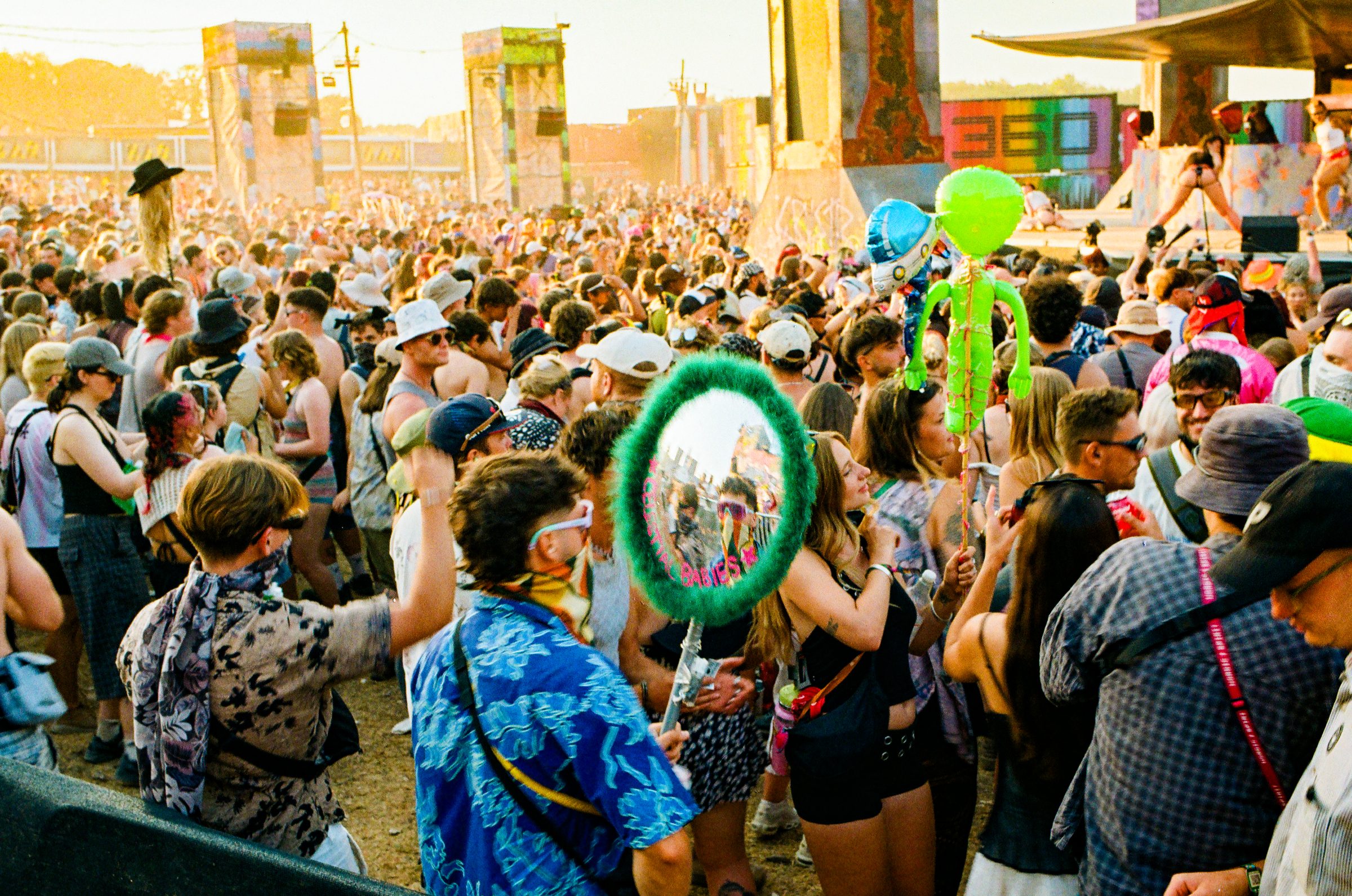
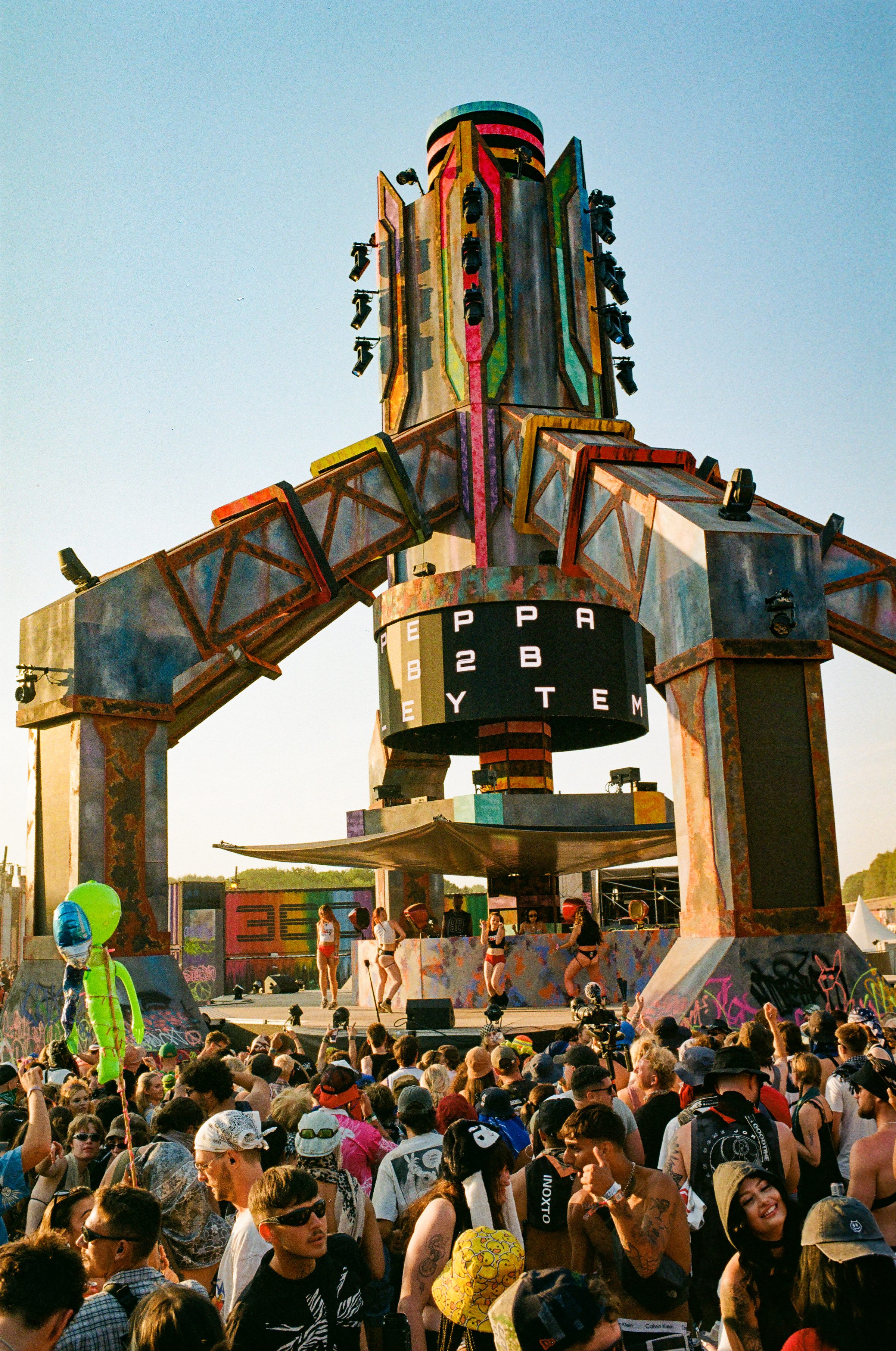
I have been four times in total and I am sure I will go again, but every time I go back I get more and more interested in becoming an observer rather than a participant. I love to try and capture the ephemeral energy of the place, the first festival that really struck something in me and showed they could be more than tents in a field. There is always this escapist bubble feeling to it that everyone gets wrapped up in, and it is just fun to capture. It is what I imagine Glastonbury is like, and what I have been told many times as well. Similar energies.
I have taken a few different cameras with me to Boomtown over the years. The first was the Olympus mju ii, which I lost. Then I bought another mju ii in 2022 because I loved them so much, but the second one I got didn't feel as good for some reason. Then I upgraded to the Yashica T4 in 2023, which is just a perfect little festival camera. Pocketable with a fast lens that is also nice and sharp in my experience, the results look like they come more from a pro-level camera, not a cheaper compact common of the time.
Then, in 2025, I took the Contax 139 Quartz with the Carl Zeiss Planar 50mm f/1.4, which captured some of my favourite shots so far and gave the photos a nostalgic feel I was looking for.
This year (2026), I took the Canon EOS 30 with some modern EF glass attached: the Canon EF 28mm, 35mm and the legendary 50mm f/1.2. A selection that performed exceptionally well in the dust and heat. I was particularly drawn to the 50mm for its lovely bokeh rendering and potential lowlight capabilities. I intended to use it a lot for portraits of people's mad outfits I liked, but all three lenses really impressed me. I will say that using modern EF glass can sometimes look ‘too sharp’ on film, but I still think you get enough of that ‘fuzziness’ around the edges I like.
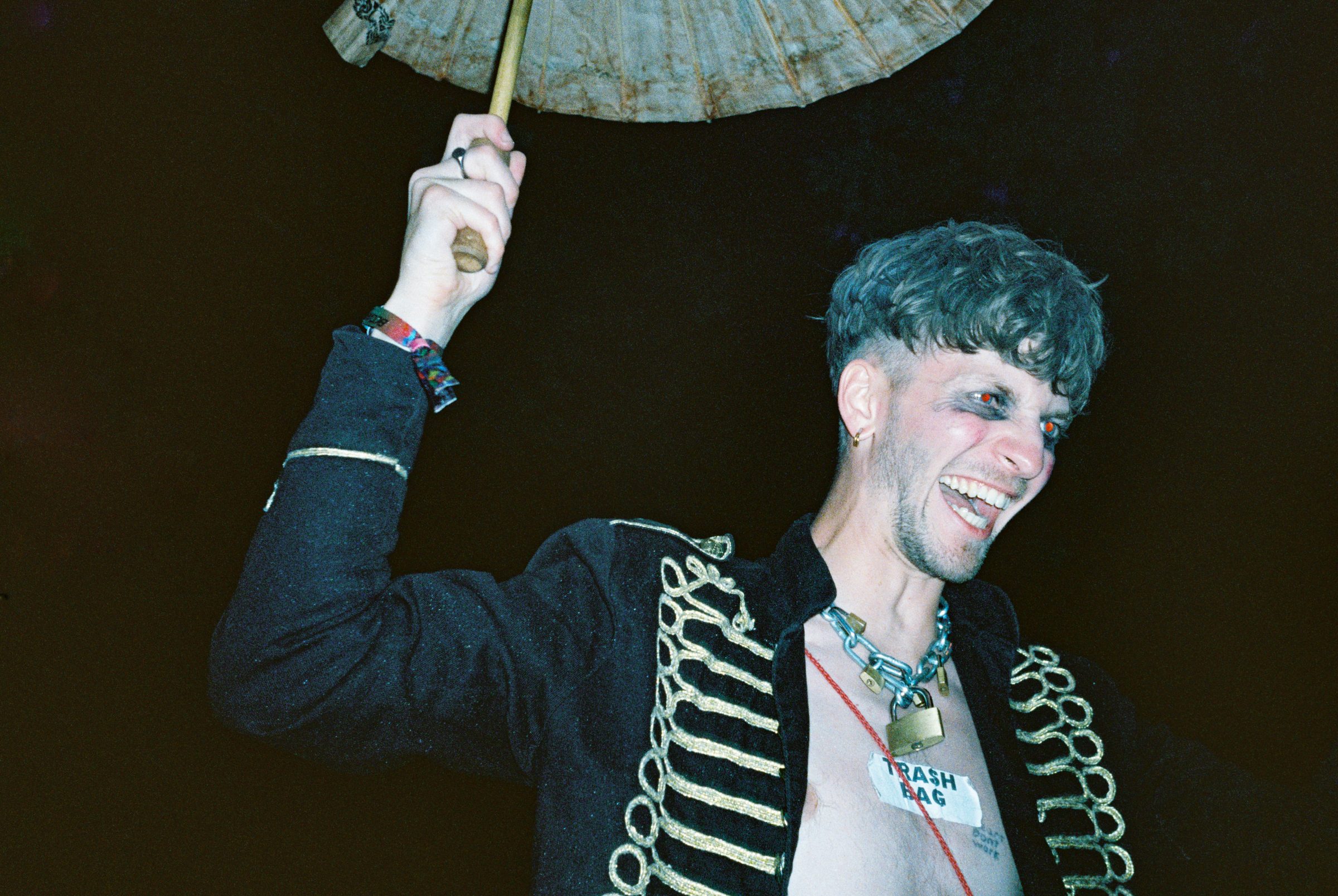
The AF these modern lenses offer is a luxury I am not used to, since I shoot manual lenses most of the time, and it makes taking a lot of shots very tempting. But if you want the colours and benefits of film, with the modern conveniences of fast AF and slick auto operations like exposure compensation, aperture/shutter priority etc, then I do highly recommend considering the last series of film cameras Canon/Nikon made before they jumped into bed with digital.
Let’s talk about film stocks. You can use anything you like for festivals, buuuuut, if you were to force a recommendation out of me, I would go with colour, and it would be Ultramax 400 or Portra 400 (if you got the phat stacks).
The 400 iso speed is perhaps the best balance for me. I find I shoot the most from the deep afternoon when the colours are starting to saturate, all through to twilight when the light is dipping to zero. 400 ISO film is a good balance for changing daylight to low-light conditions. A lot of the action is at night anyway. But, saying that, 200 speed film like Color Plus 200 is fantastic for the daytime, I was very happy with the roll I shot this year of Color Plus, and it is the more economical option these days. In an ideal world, I would start the day with Color Plus, have a roll shot by 5pm, then load a 400 speed film like Portra, shoot that until 9pm, then load a 800 or 1600 speed film.
But, rarely would things go so smoothly. Perhaps when film was the only option back in the day, photographers covering festivals for magazines and newspapers had a process locked down. Festivals are tough environments to predict at the best of times, factoring in the weather and running from stage to stage, trying to catch all the acts you want to see, getting all flustered. These days I am over that mad rush to see it all, I prefer to take it slower and be ‘more present’ - which helps let the photographers brain settle in, as it were.
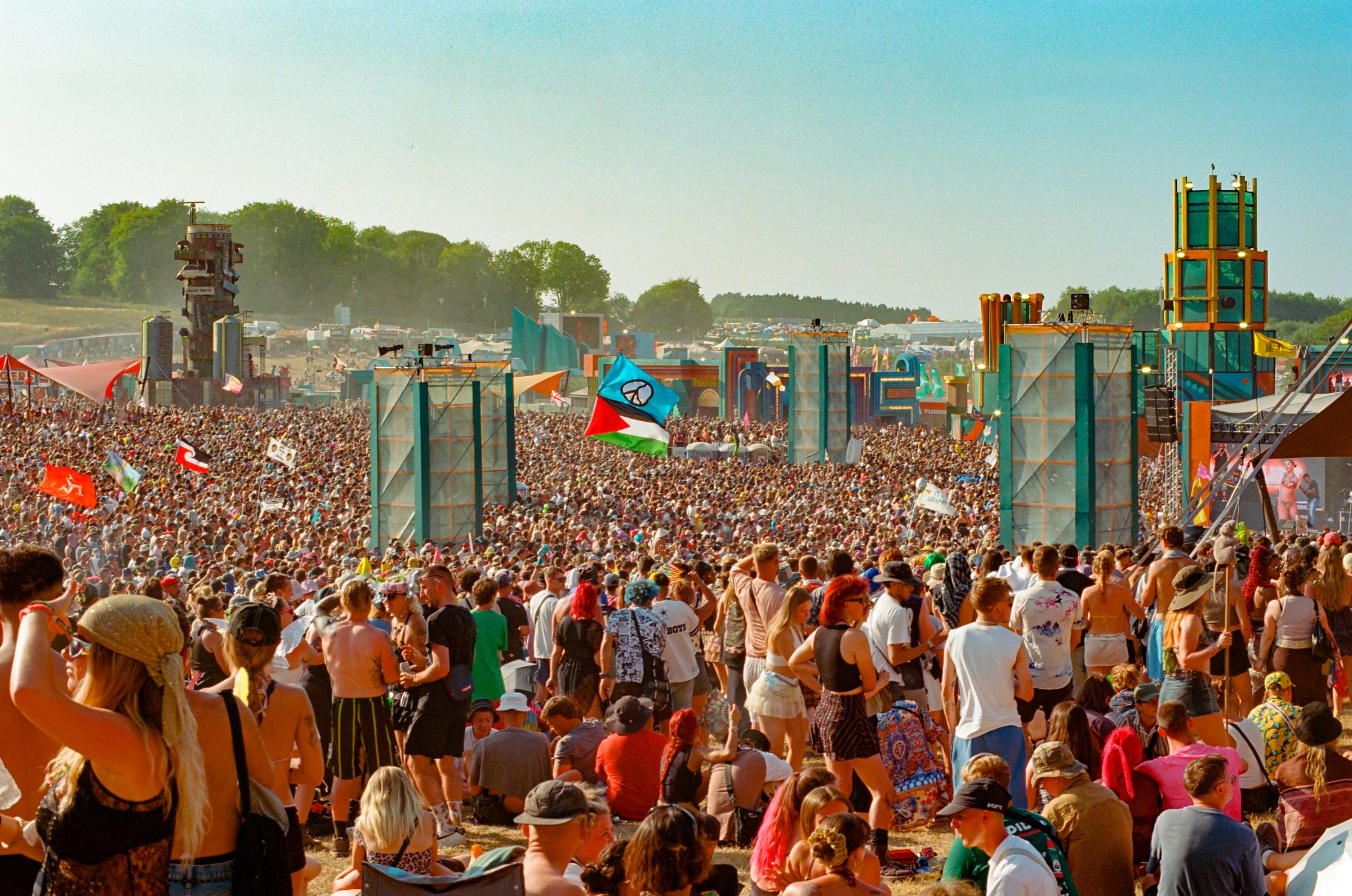
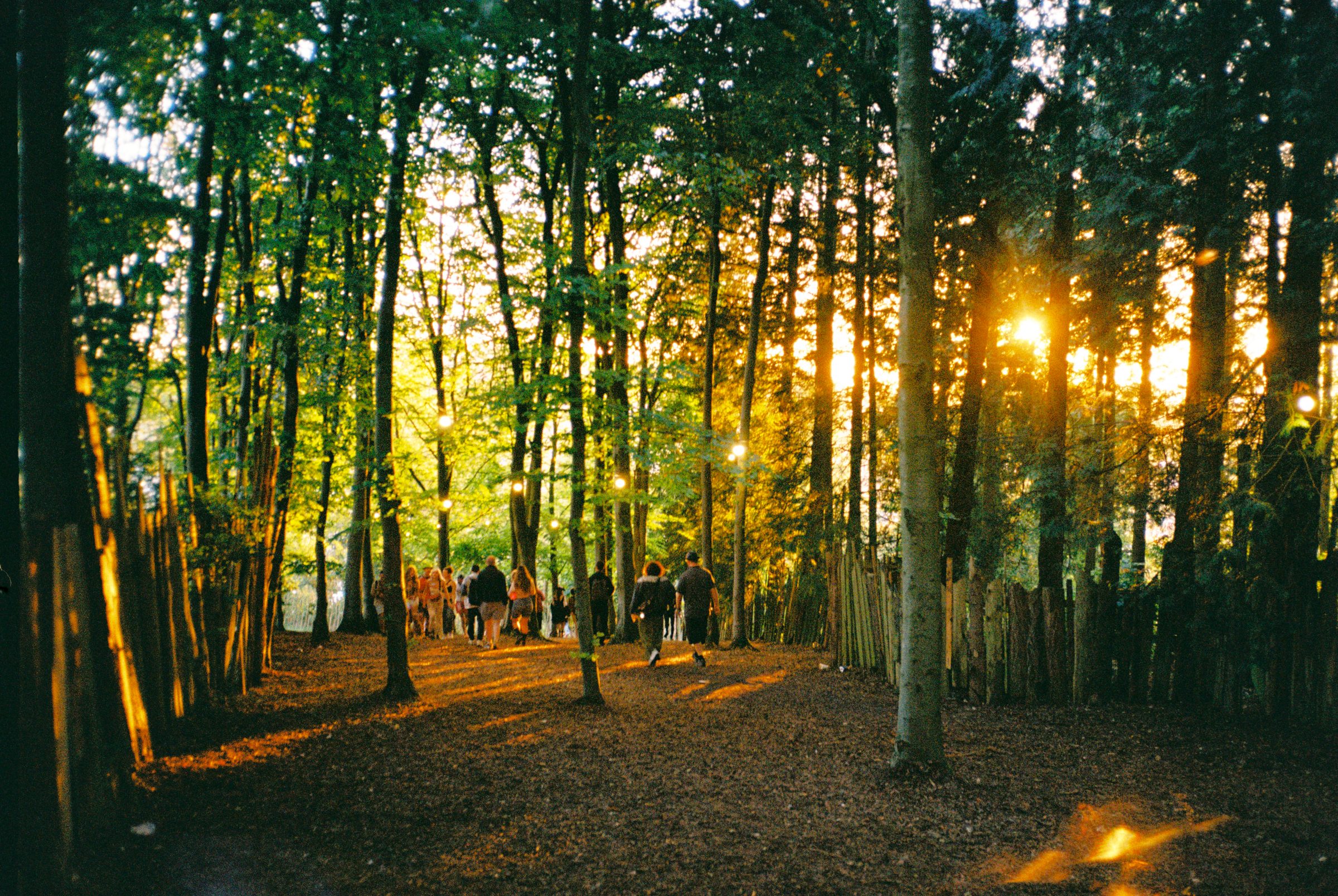
That 6-8pm period is the magic time for searching. People are getting hyped for the night ahead, have donned their best outfit and freshened up after a day in the searing sun, which was the case this year in what felt like a desert bowl. Burning Man has always been a dream of mine. Maybe one day.
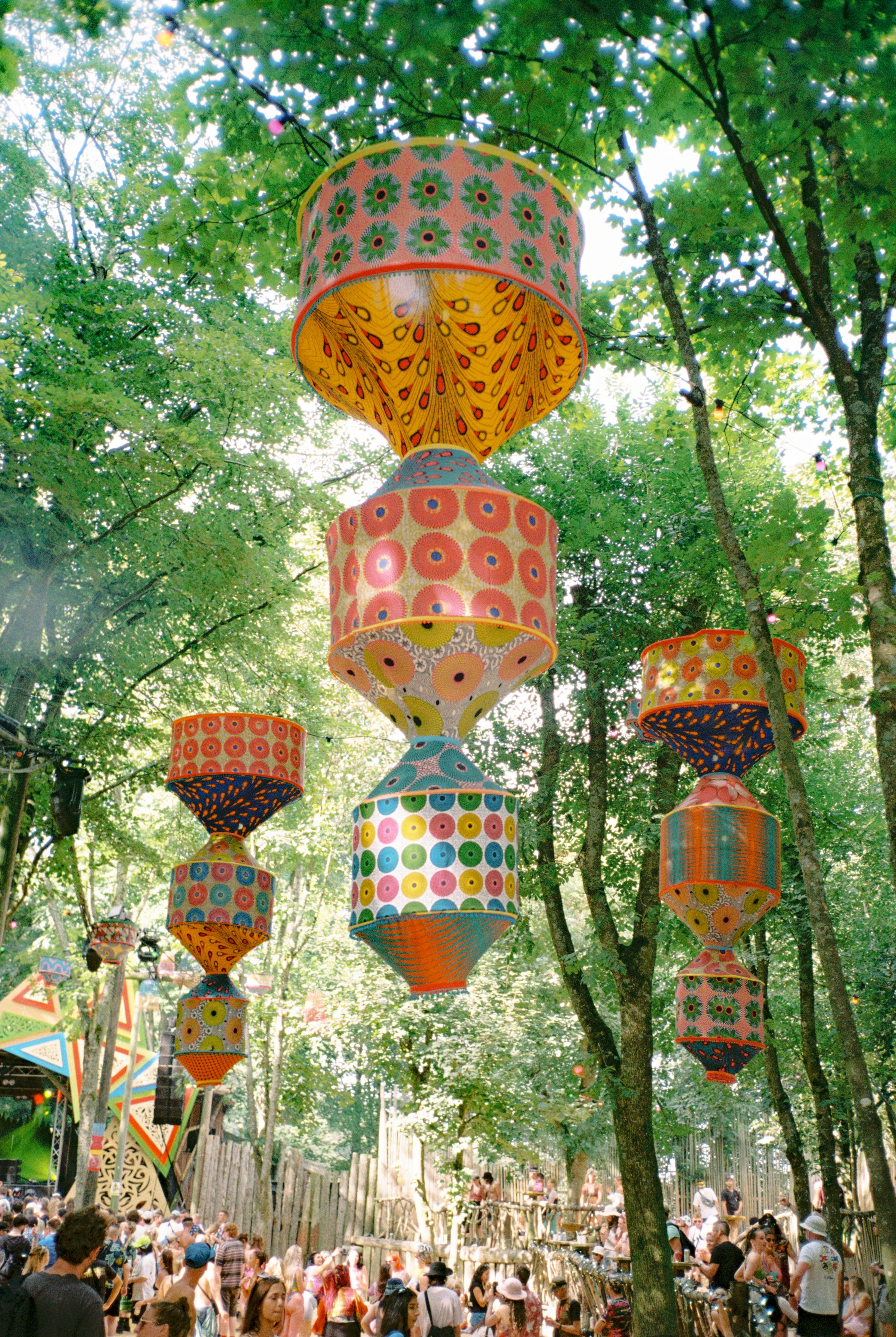
I think colour film is the best way to go when shooting a festival. There is so much vibrancy and richness from the various set pieces, scenery, actors, outfits, props, walking snails and the like about that it would be a shame not to show it; is my thinking anyway.
The very conscious limits of 36 shots in a roll of film encourage me to go slower and more deliberate. I don’t look at the photos I take on my phone from previous festivals, but I do look at the rolls I have from festivals from time to time. The negatives are like little physical memories of that particular day and mood and they become nostalgic, the phone pictures blur into one homogenous digital blob chucked in with the rest of my phones 15,000 strong image gallery.
Obviously, if I was to shoot a festival professionally I would not just shoot it on film, I would use a mix of digital and film, but the qualities of film undeniably go hand in hand with the festival experience and when I go as an audience member, I never think to bring a digital camera, imagine the hundreds or thousands of pictures to wade through and edit? Nah, someone would need to pay me to do it.
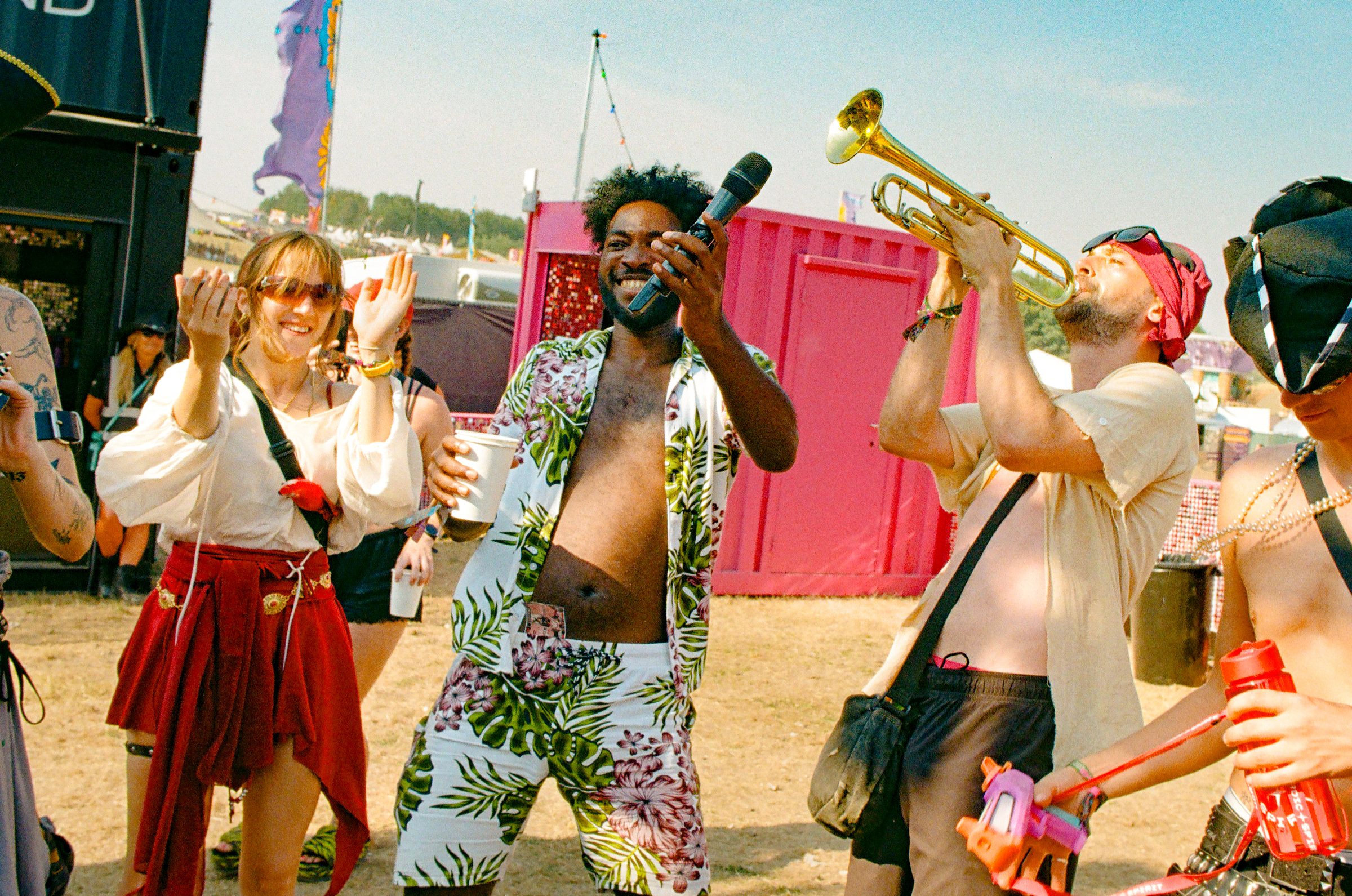
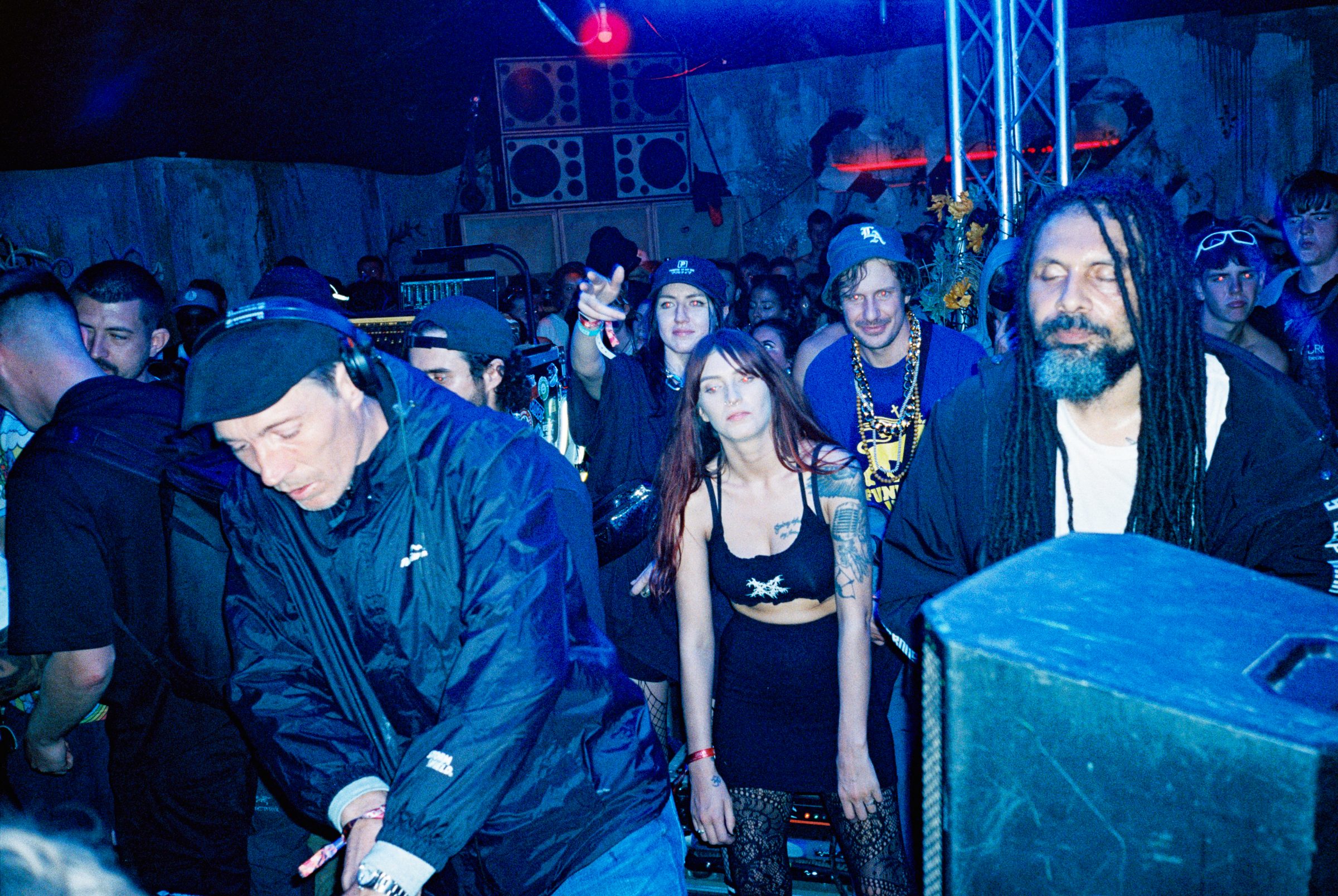
I am not a pro booked photographer, I also have fun and participate in it, there's a slight separation but in amongst it, it’s an interesting place to be. The veil thins between professionalism and candidness, not weighted down by commitments and shot lists, I can move freely as someone part of it rather than documenting it for commercial reasons. Which puts people's guard up in some respects, and why I think a small compact camera can produce more intimate, personable pictures on the whole. You’re just another escapist.
I like the feeling of being half-cut and loose with the camera and not thinking too much about what I am doing, which is a breath of fresh air as someone who now uses medium format and thinks about the shot I am about to take in detail. The opposite is true at a festival, it is often so fast-moving, I don’t want to sit there and compose—I want to almost be a child again, just playing.
There are so few places where people's guards are down. Where they are just themselves for a night. The boundaries of photographing people who are intoxicated is interesting. Where do you draw the line? Boundaries are lifted at a festival and fluid, the morning time and nighttime have vastly different feelings to them mentally and physically. Festivals in many aspects are a place to be seen, and see others. A place for self-expression and the averting of normal cultural boundaries. Sometimes it’s a place for radicalisation and animalism, and that is what I as a photographer have to try and find and capture.
I have not covered the festival as an official photographer before, but I hope to one day, and if I get to do it on film, then even sweeter.
Location
Brighton, UK
Photographs © Connor Redmond. Copyright remains with the photographer.
ENJOYED READING?
Visit our Instagram, find this article’s post and leave a like or comment. We’d love to hear what you think.